Back to Overview
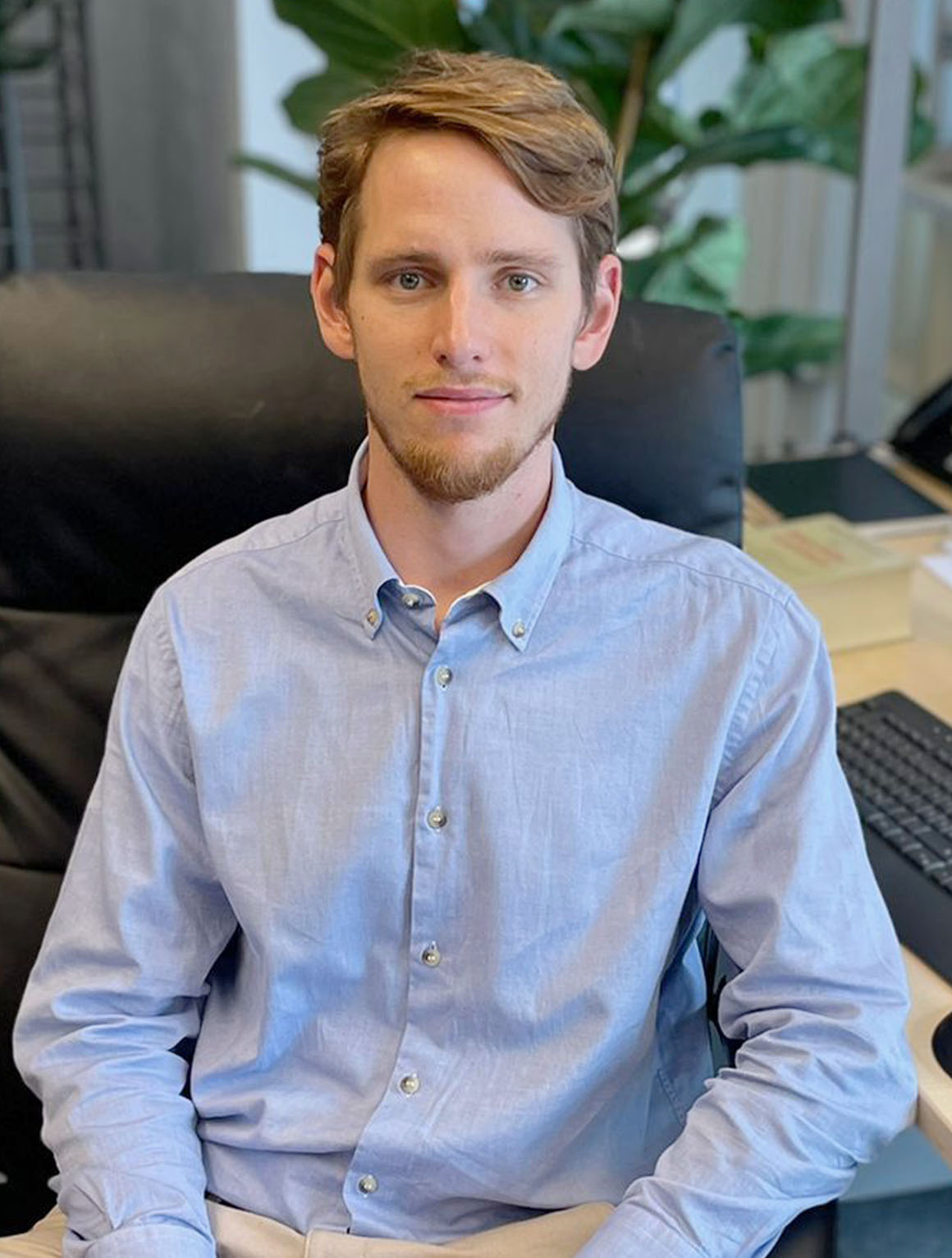
Dr. Martin Fabry
Martin Fabry completed his bachelor’s degree in Molecular Biomedicine at the University of Bonn in 2014 and subsequently moved to the US as a visiting scientist at Cold Spring Harbor Laboratory (New York), where he worked on improving CRISPR/Cas9 technologies. In 2016, he obtained a master’s degree in Life and Medical Sciences with a focus on molecular mechanisms of immunity, before starting his PhD in Medical Sciences with Cancer Research UK at the University of Cambridge, where he studied genome organisation and stability.
After receiving his doctorate in 2020, Martin worked as a postdoctoral fellow in computational biology at the Gurdon Institute and the European Bioinformatics Institute (EBI) in Cambridge, focusing on stem cell development and the establishment of new technologies for stem cell differentiation.
Martin is a registered German and European Patent and Trademark Attorney, and became Managing Director of IP2 in early 2025.
- Life Science 100%
What more there is to say...
In his leisure time Martin likes running, hiking, diving and rowing.
What moves me

Euro Bank notes – turn around and see
Always trouble around the Euro We all have colorful euro bills in our hands every day, but hand on heart: do you know what is depicted on these banknotes? I also had to look it up: on the front there are examples of architecture from different centuries and next to it...

Pitfalls for Patent Filing
Part I: When insufficient disclosure becomes a case (1) In this new section of our blog, we want to deal with the pitfalls that cause patent applications to fail again and again without need. The main focus will be on current decisions of the EPO and the German...

10 Years Nagoya Protocol
New White Paper from IP2 It took 12 years from the first declaration of intent on the protection of genetic resources and indigenous knowledge, the so-called "Rio Convention" of 1992, until the Nagoya Protocol was adopted as a binding agreement under international...
Back to Overview